
Explore Traditional Craft Villages Near Phu Ly
Phu Ly is not only convenient for business trips, weekend getaways or journeys to spiritual destinations. From the city center, visitors can also connect to many long-standing traditional craft villages, where skilled hands, diligent lifestyles and cultural values have been preserved through generations.
If you are already familiar with Tam Chuc, Long Doi Son Pagoda, Dia Tang Phi Lai Tu or the new leisure destinations around Phu Ly, a visit to a craft village will bring a very different experience. Without noise or complicated itineraries, embroidery villages, silk villages, bamboo and rattan villages, and drum-making villages open up a closer view of the newly expanded Ninh Binh region: simple, refined and rich in cultural depth.
For guests staying in Phu Ly, this is also a suitable suggestion to include in a 1-day or 2-day-1-night itinerary. The morning can be spent visiting a cultural or spiritual site, the afternoon exploring a craft village, and the evening returning to the city center to rest. The rhythm is light enough, yet leaves visitors with many stories to remember after the trip.
The charm of Thanh Ha Embroidery Village lies in its meticulousness. Every stitch requires skillful hands, sharp eyes and the patience of the artisan. From fine threads, craftsmen create patterns, motifs, embroidered paintings, scarves, curtains, garments, decorative lacework and many handmade products with high aesthetic value.
.png)
When visiting the embroidery village, travelers can feel the slow rhythm of a Northern Vietnamese craft village. The space is not overly lively, yet it has its own attraction through the sounds of work, embroidery frames, colorful threads and the focused posture of artisans completing their products.
For those who love handmade items, Thanh Ha Embroidery Village is a worthwhile stop. An embroidered scarf, a small framed artwork or a delicate lace product can become a meaningful souvenir after the trip, light in form but rich in feeling.
.png)
In Nha Xa, visitors can learn about the process of creating a piece of fabric: from silk threads to weaving, dyeing, drying and finishing. Each stage requires experience, care and the subtle sensitivity of the artisan. Perhaps that is why Nha Xa silk is not merely a product to wear or use, but also carries the story of a riverside village.
The interesting part of visiting the silk village is seeing tradition still moving within modern life. Looms, silk-drying yards, colorful fabrics and the dedication of the weavers create a space that feels both simple and artistic.
Visitors can combine a trip to Nha Xa Silk Village with nearby cultural sites in the Duy Tien area, such as Long Doi Son Pagoda, Lanh Giang Temple or several riverside stops. This journey is suitable for those who enjoy local culture, appreciate handmade products and want to find souvenirs with stories of their own.
.png)
From familiar rural materials, Ngoc Dong artisans create a wide variety of products, including household items, interior decorations, handicrafts, baskets, trays, boxes, tables, chairs, decorative objects and many export products. Each item reflects skill in selecting materials, processing strips, weaving and finishing.
The appeal of Ngoc Dong lies in its rustic beauty. Without showiness or excessive decoration, bamboo and rattan products win people over through durability, familiarity and refinement in every woven detail. When watching artisans at work, visitors can easily recognize how much time, experience and patience stand behind each handmade object.
With the growing trend toward green living, natural materials and handmade products, Ngoc Dong Craft Village has become even more attractive. It is a suitable destination for travelers who want to learn about a traditional craft connected to Northern Vietnam’s rural life, while also choosing a few small items as gifts or home decorations.
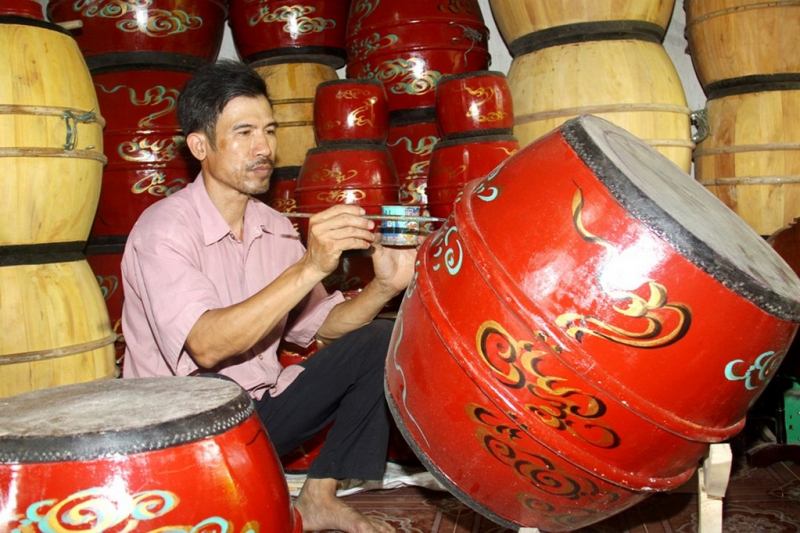
What makes drum-making special is the combination of technique, experience and sound sensitivity. A good drum must not only look beautiful, but also produce a firm, round and deep sound. From selecting wood, processing leather, shaping the drum body, stretching the drumhead to tuning the sound, every step requires skilled hands.
Visiting Doi Tam, travelers can learn more about a handicraft deeply rooted in Vietnamese culture. The sound of drums is not only connected to festivals, but also evokes village schools, communal houses, harvest celebrations and the shared rhythm of many Northern countryside communities.
When combined with Long Doi Son Pagoda or nearby attractions, Doi Tam Drum-Making Village can become an interesting stop in a cultural journey around Phu Ly.
Each craft village has its own story. Some are connected to natural materials, some are known for their crafting techniques, while others have preserved their trades through many family generations. What they share is endurance. Even as life changes, artisans continue to keep their crafts alive, renew their products and pass on part of the cultural memory of their homeland.
For visitors, a craft village journey is not only about seeing products. It is also an opportunity to meet artisans, listen to the stories behind each handmade item, understand more about rural life and see how tradition continues to exist in modern times.
With a 2-day-1-night itinerary, visitors will have more time to combine craft villages, spiritual sites, leisure activities and rest in central Phu Ly. The first day can be spent visiting Tam Chuc or Truc Temple - Ngu Dong Thi Son, followed by an overnight stay in Phu Ly. The next day can be dedicated to a traditional craft village, a light lunch and then the return to Hanoi or onward travel to Ninh Binh.
When visiting craft villages, guests should contact the village or workshops in advance if they wish to observe the production process or purchase products directly. Some workshops may operate according to orders, seasons or specific hours. Preparing ahead will make the trip smoother and help avoid missing valuable experiences.

After a day spent moving through craft villages, meeting artisans, admiring handmade products and feeling the rhythm of countryside life, returning to a clean and comfortable accommodation space will make the journey more relaxing. Tien Loc Palace offers warm guest rooms, a restaurant, Enjoy Coffee, a gym on the 19th floor, a convenience store and supporting services throughout the stay.
If you are looking for a different kind of journey when visiting Phu Ly, consider taking time to explore the traditional craft villages around the city. It will be a slower trip, closer to local life and rich enough in feeling to linger in memory long after you return.
Tien Loc Palace is delighted to accompany guests on journeys to discover the culture of Ha Nam - Ninh Binh.
If you are already familiar with Tam Chuc, Long Doi Son Pagoda, Dia Tang Phi Lai Tu or the new leisure destinations around Phu Ly, a visit to a craft village will bring a very different experience. Without noise or complicated itineraries, embroidery villages, silk villages, bamboo and rattan villages, and drum-making villages open up a closer view of the newly expanded Ninh Binh region: simple, refined and rich in cultural depth.
For guests staying in Phu Ly, this is also a suitable suggestion to include in a 1-day or 2-day-1-night itinerary. The morning can be spent visiting a cultural or spiritual site, the afternoon exploring a craft village, and the evening returning to the city center to rest. The rhythm is light enough, yet leaves visitors with many stories to remember after the trip.
Thanh Ha Embroidery Village - Delicate Beauty in Every Stitch
Not far from central Phu Ly, Thanh Ha Embroidery Village, including the well-known An Hoa hamlet, has long been recognized for its handmade embroidery and lacework. The embroidery craft in Thanh Ha appeared in the late 19th century and has developed through many generations, becoming a distinctive cultural mark of the old Thanh Liem land.The charm of Thanh Ha Embroidery Village lies in its meticulousness. Every stitch requires skillful hands, sharp eyes and the patience of the artisan. From fine threads, craftsmen create patterns, motifs, embroidered paintings, scarves, curtains, garments, decorative lacework and many handmade products with high aesthetic value.
When visiting the embroidery village, travelers can feel the slow rhythm of a Northern Vietnamese craft village. The space is not overly lively, yet it has its own attraction through the sounds of work, embroidery frames, colorful threads and the focused posture of artisans completing their products.
For those who love handmade items, Thanh Ha Embroidery Village is a worthwhile stop. An embroidered scarf, a small framed artwork or a delicate lace product can become a meaningful souvenir after the trip, light in form but rich in feeling.
Nha Xa Silk Weaving Village - Soft Colors by the River
When mentioning traditional craft villages in the former Ha Nam area, Nha Xa Silk Weaving Village is always among the most notable destinations. Located in the Moc Nam area by the Red River, the village has been associated with silk weaving for generations. Nha Xa’s silk, raw silk and linen fabrics carry a soft, rustic charm while still preserving the elegance of traditional materials.In Nha Xa, visitors can learn about the process of creating a piece of fabric: from silk threads to weaving, dyeing, drying and finishing. Each stage requires experience, care and the subtle sensitivity of the artisan. Perhaps that is why Nha Xa silk is not merely a product to wear or use, but also carries the story of a riverside village.
The interesting part of visiting the silk village is seeing tradition still moving within modern life. Looms, silk-drying yards, colorful fabrics and the dedication of the weavers create a space that feels both simple and artistic.
Visitors can combine a trip to Nha Xa Silk Village with nearby cultural sites in the Duy Tien area, such as Long Doi Son Pagoda, Lanh Giang Temple or several riverside stops. This journey is suitable for those who enjoy local culture, appreciate handmade products and want to find souvenirs with stories of their own.
Ngoc Dong Bamboo and Rattan Weaving Village - Skillful Craft from Bamboo, Rattan and Giang
Ngoc Dong Bamboo and Rattan Weaving Village, located in the Duy Tien area, is famous for handmade products made from rattan, bamboo and giang. In a countryside setting by the Nhue River, local people have preserved the weaving craft for many generations, bringing the village’s products to both domestic and international markets.From familiar rural materials, Ngoc Dong artisans create a wide variety of products, including household items, interior decorations, handicrafts, baskets, trays, boxes, tables, chairs, decorative objects and many export products. Each item reflects skill in selecting materials, processing strips, weaving and finishing.
The appeal of Ngoc Dong lies in its rustic beauty. Without showiness or excessive decoration, bamboo and rattan products win people over through durability, familiarity and refinement in every woven detail. When watching artisans at work, visitors can easily recognize how much time, experience and patience stand behind each handmade object.
With the growing trend toward green living, natural materials and handmade products, Ngoc Dong Craft Village has become even more attractive. It is a suitable destination for travelers who want to learn about a traditional craft connected to Northern Vietnam’s rural life, while also choosing a few small items as gifts or home decorations.
Doi Tam Drum-Making Village - The Resonance of an Ancient Craft
Alongside embroidery, silk and bamboo weaving, the former Ha Nam area is also famous for Doi Tam Drum-Making Village. This long-standing craft village is associated with talented artisans who make drums for festivals, temples, communal houses, schools, cultural activities and community events.What makes drum-making special is the combination of technique, experience and sound sensitivity. A good drum must not only look beautiful, but also produce a firm, round and deep sound. From selecting wood, processing leather, shaping the drum body, stretching the drumhead to tuning the sound, every step requires skilled hands.
Visiting Doi Tam, travelers can learn more about a handicraft deeply rooted in Vietnamese culture. The sound of drums is not only connected to festivals, but also evokes village schools, communal houses, harvest celebrations and the shared rhythm of many Northern countryside communities.
When combined with Long Doi Son Pagoda or nearby attractions, Doi Tam Drum-Making Village can become an interesting stop in a cultural journey around Phu Ly.
Other Craft Villages Near Phu Ly
In addition to the well-known craft villages above, the area around Phu Ly also has many other destinations for visitors who love handmade culture. These include Quyet Thanh Pottery Village in Kim Bang, Do Hai Horn Handicraft Village in Binh Luc and several traditional craft villages scattered across the Ha Nam - Ninh Binh region.Each craft village has its own story. Some are connected to natural materials, some are known for their crafting techniques, while others have preserved their trades through many family generations. What they share is endurance. Even as life changes, artisans continue to keep their crafts alive, renew their products and pass on part of the cultural memory of their homeland.
For visitors, a craft village journey is not only about seeing products. It is also an opportunity to meet artisans, listen to the stories behind each handmade item, understand more about rural life and see how tradition continues to exist in modern times.
Suggested Itinerary for Exploring Craft Villages Near Phu Ly
If you have one day in Phu Ly, it is best to choose one or two craft villages to visit, instead of arranging too many stops and making the itinerary feel rushed. In the morning, guests can visit Thanh Ha Embroidery Village or Nha Xa Silk Weaving Village. In the afternoon, the journey can be combined with Long Doi Son Pagoda, Lanh Giang Temple, Doi Tam Drum-Making Village or a nearby cultural and spiritual destination.With a 2-day-1-night itinerary, visitors will have more time to combine craft villages, spiritual sites, leisure activities and rest in central Phu Ly. The first day can be spent visiting Tam Chuc or Truc Temple - Ngu Dong Thi Son, followed by an overnight stay in Phu Ly. The next day can be dedicated to a traditional craft village, a light lunch and then the return to Hanoi or onward travel to Ninh Binh.
When visiting craft villages, guests should contact the village or workshops in advance if they wish to observe the production process or purchase products directly. Some workshops may operate according to orders, seasons or specific hours. Preparing ahead will make the trip smoother and help avoid missing valuable experiences.
Stay at Tien Loc Palace for a More Convenient Craft Village Journey
With its central location in Phu Ly, Tien Loc Palace is a suitable stop for visitors who wish to combine rest with exploring traditional craft villages around the region. From the hotel, guests can easily arrange itineraries to Thanh Liem, Duy Tien, Kim Bang, Binh Luc and many nearby cultural and spiritual destinations.After a day spent moving through craft villages, meeting artisans, admiring handmade products and feeling the rhythm of countryside life, returning to a clean and comfortable accommodation space will make the journey more relaxing. Tien Loc Palace offers warm guest rooms, a restaurant, Enjoy Coffee, a gym on the 19th floor, a convenience store and supporting services throughout the stay.
If you are looking for a different kind of journey when visiting Phu Ly, consider taking time to explore the traditional craft villages around the city. It will be a slower trip, closer to local life and rich enough in feeling to linger in memory long after you return.
Tien Loc Palace is delighted to accompany guests on journeys to discover the culture of Ha Nam - Ninh Binh.
.png)
.png)
.png)
.png)
.png)
.png)
.png)
.png)
.png)
(1).png)